Table of contents
What makes a trip unforgettable is not always the landmark you came for, and in 2026, as overtourism pressures cities from Barcelona to Bali, travelers are being nudged toward the “in-between” moments they once rushed past. Tour operators report rising demand for hands-on, local activities, while destinations increasingly market dispersion and smaller-group experiences to protect crowded cores. The paradox is striking: the most defining memories often come from what you did not plan, or nearly skipped, and the cost of missing out is rarely measured in money alone.
The best memories rarely follow the itinerary
Ask returning travelers what they remember most, and the answers often sound oddly unspectacular on paper: an impromptu cooking lesson after a market visit, a late-afternoon walk that turned into a neighborhood festival, a conversation with a guide who reframed an entire country’s history. That gap between what people book and what they cherish is increasingly visible in travel data, and it is reshaping how trips are sold, designed, and reviewed.
Tourism economics has long relied on “icons” as demand magnets, yet the mechanics of satisfaction are more granular. Online review platforms have created a feedback loop in which experiences that deliver high emotional payoff, such as small-group cultural workshops or nature-based activities, can outperform famous sights in ratings. TripAdvisor’s “Travelers’ Choice” categories, for example, have repeatedly highlighted experience-led products, from food tours to day trips, as top performers, and the shift is not purely anecdotal: experiential travel has been one of the strongest segments in global tourism for a decade, with industry analysts at Skift and Phocuswright tracking sustained growth in tours and activities as a share of trip spend.
There is also a behavioral explanation: travelers tend to overestimate the value of “must-see” lists and underestimate the value of time, friction, and mood. A two-hour queue, a crowded viewpoint, and a rushed lunch can flatten what should have been a highlight, while a modest detour can open space for curiosity and, crucially, for rest. That is why overlooked activities, a short hike outside a city, a workshop with local artisans, a sunset boat ride on a lesser-known route, can end up defining the emotional arc of a journey; they restore a sense of agency in a travel environment often dominated by timetables and crowds.
In practice, the “missing out” that matters is not only about skipping a ticketed attraction. It is the missed chance to slow down and to meet a place on its own terms, and that is where smart planning becomes less about adding more, and more about selecting better: fewer stops, more texture, and experiences that reflect how people actually live. The travel industry has noticed, and destinations, especially those under pressure, are leaning into this shift because it spreads visitors beyond the postcard center, while giving travelers a richer reason to stay longer.
Overtourism makes small choices matter
Crowds are no longer a seasonal inconvenience; in many destinations they have become a structural feature, and that reality changes how a day feels on the ground. When access to the “top three” is squeezed by timed entry, reservation systems, and peak-hour congestion, the overlooked activity is not a consolation prize, it can be the difference between a stressful day and a restorative one.
European cities illustrate the trend. Venice has continued to tighten visitor management, including the introduction of a day-tripper fee on certain dates, and other destinations have expanded timed-entry and capacity controls at cultural sites. In the United States, national parks such as Arches and Rocky Mountain have used timed-entry systems in recent years to manage peak demand. These policies are often framed as crowd management, but they also influence traveler behavior: once a “must-see” requires a specific time slot, the surrounding hours become an opportunity to explore something adjacent, often less crowded and more locally grounded.
At the same time, the economics of overtourism push travelers toward experiences with clearer value. Paying for a small-group activity can feel more defensible than paying a premium for a stressed, overfilled space, and operators have adapted by building products around access, interpretation, and authenticity. A guided food walk, for instance, turns a meal into context: why ingredients matter, what neighborhoods are changing, how migration shaped a local palate. A community-based visit in a rural area can reframe a country beyond its capital, and it can distribute revenue more widely, a point repeatedly emphasized in sustainable tourism research, including work promoted by the UN World Tourism Organization (UNWTO) around community benefit and dispersion.
None of this eliminates the desire to see famous places. The journalist’s point is simpler: in a crowded world, the marginal utility of another headline sight is shrinking, while the marginal utility of a well-chosen “secondary” activity is rising. Travelers who ignore that shift often return with a familiar complaint, “We did everything, but it felt rushed,” and the fix is rarely to cram in more. It is to plan a day around one anchor, then leave room for two smaller experiences that restore energy, create interaction, and reduce time spent in lines.
Even the climate dimension feeds this logic. Hotter summers and more frequent heatwaves in Mediterranean regions have changed the rhythm of travel, making early-morning or late-afternoon activities, including shaded walks, water-based excursions, and indoor workshops, more attractive. Choosing an overlooked activity can be a comfort decision as much as a cultural one, and, increasingly, comfort is part of what separates a trip you merely completed from one you remember.
Local activities reveal what guidebooks miss
Here is the uncomfortable truth: a city can be famous and still feel anonymous. Without a point of contact, a guide who translates nuance, a workshop that slows the pace, a family-run business that tells you how the neighborhood has changed, travel risks becoming a series of backdrops. Overlooked activities, the ones that rarely headline glossy lists, are often the easiest way to replace “seen” with “understood”.
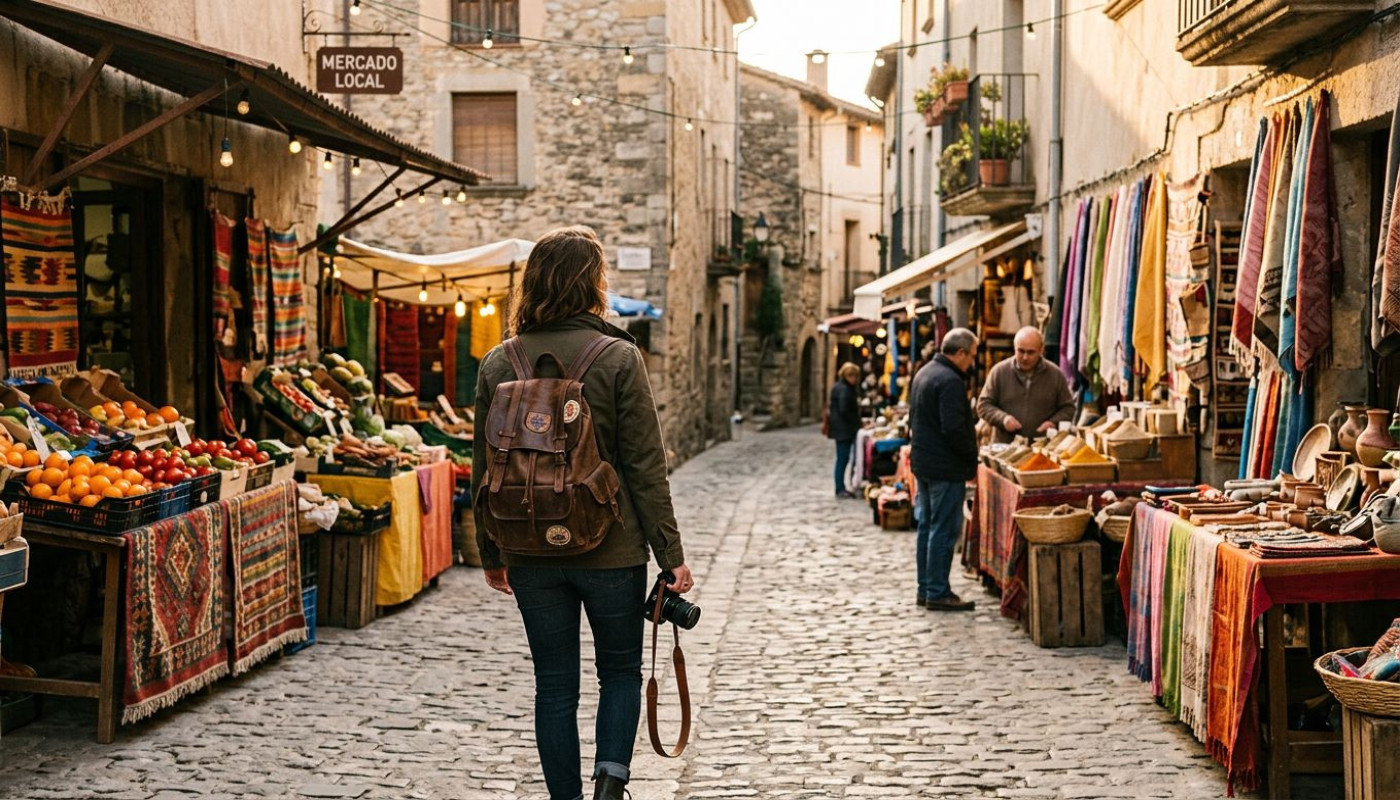
That is why food, craft, and nature-based activities keep rising. They convert passive consumption into participation, and participation sticks. Cognitive psychologists have long noted that memory strengthens when people engage multiple senses and when a moment carries emotion or novelty; travel experiences that involve tasting, making, learning, or navigating create precisely that mix. A market visit becomes a story when you can name the spice, recognize the technique, and understand the social code around bargaining. A desert outing becomes more than a photo when someone explains how wind shapes dunes, how water is managed, and what it means to live with scarcity.
This matters sharply in countries where travelers often compress too much into too little time. Jordan is a good example: many itineraries race from Petra to Wadi Rum to the Dead Sea, and the skeleton of the trip is strong, but the connective tissue is where meaning grows. A brief stop in a lesser-known valley, a guided walk that explains Nabataean engineering beyond the postcard façade, or a conversation that situates modern Jordanian identity alongside ancient heritage can transform the journey, and it can also reduce the “same trip as everyone else” feeling that social media sometimes amplifies.
Practical access plays a role, too. Activities that are simple to organize, transparently priced, and well supported logistically are more likely to be taken, which is why curated platforms and specialist operators matter, especially for travelers who want depth but do not have time to research every detail. For those building a Jordan itinerary around cultural encounters and outdoor experiences, many travelers start by comparing options and availability site here, then shaping the trip around a manageable number of high-impact days rather than an exhausting checklist.
The overlooked activity is not always remote or niche. Sometimes it is as ordinary as taking public transport with a local, joining a neighborhood cooking session, or attending a small cultural event that never appears in top-ten rankings. These moments can feel risky because they are not “validated” by mass tourism, yet they are often safer and smoother than assumed when organized through reputable channels, and they are consistently the moments travelers cite when asked what made the destination feel real.
How to avoid missing out, without overbooking
No one wants a holiday that feels like project management. The goal is not to book every hour; it is to book the right two or three experiences that will carry the trip, then protect the empty spaces around them. That approach is also more resilient when weather changes, when a site is unexpectedly closed, or when fatigue hits, which it often does on day three.
Start with one “pillar” per day, a major site or a long excursion, then choose one smaller, overlooked activity that complements it. Petra paired with a short, guided context session can deepen what you see; Wadi Rum paired with a stargazing experience can change the tone of the night; the Dead Sea paired with a local food stop can prevent the day from collapsing into a single resort loop. This structure reduces decision fatigue and lowers the chance that you will skip the very thing you will later regret because “we ran out of time”.
Budgeting helps, too, because missing out is often a financial miscalculation. Travelers regularly allocate a disproportionate share to flights and hotels, then hesitate on experiences that cost far less but deliver lasting value. Industry surveys frequently show that travelers are willing to pay for “unique” or “authentic” activities, yet on the ground they may default to free wandering simply because they did not earmark funds. A simple rule is to set aside a fixed percentage of the trip cost for activities, then spend it deliberately on one or two high-quality options rather than scattering it across mediocre add-ons.
Timing is the final lever. Booking early morning or late afternoon reduces crowd friction, and it can be essential in high season. Reserving key experiences in advance, especially small-group ones, also prevents the classic trap: you assume you will decide later, later becomes too late, and the activity that would have defined your trip is sold out. The difference between a great and a forgettable travel week is often a single reservation made at the right time, and the discipline to leave the rest of the day open enough to breathe.
Before You Go: book smart, spend better
Plan one major highlight per day, then add one smaller, local experience that matches it, and keep the remaining hours flexible. Set a clear activities budget early, because tours and workshops often deliver the highest memory-per-dollar return. In peak periods, reserve in advance, and look for potential discounts, city passes, or seasonal offers that can reduce costs without sacrificing depth.
Similar articles

What Your Travel Itinerary Reveals About Your Cultural Curiosity
Why Your Next Travel Itinerary Needs More Spontaneity
What Adventure Guides Wish You Knew Before Picking Your Next Activity
Is An Excursion Off The Beaten Path Worth The Risk?

Exploring The Top Trends In Freeride Sports Equipment?
Exploring Hidden River Gems: Unveiling Lesser-Known Adventure Spots

How To Choose The Perfect Catamaran For Your Sailing Trip?